
How to qualify urgent home-service enquiries
Published by NESDZO LTD · NEmployee · Updated
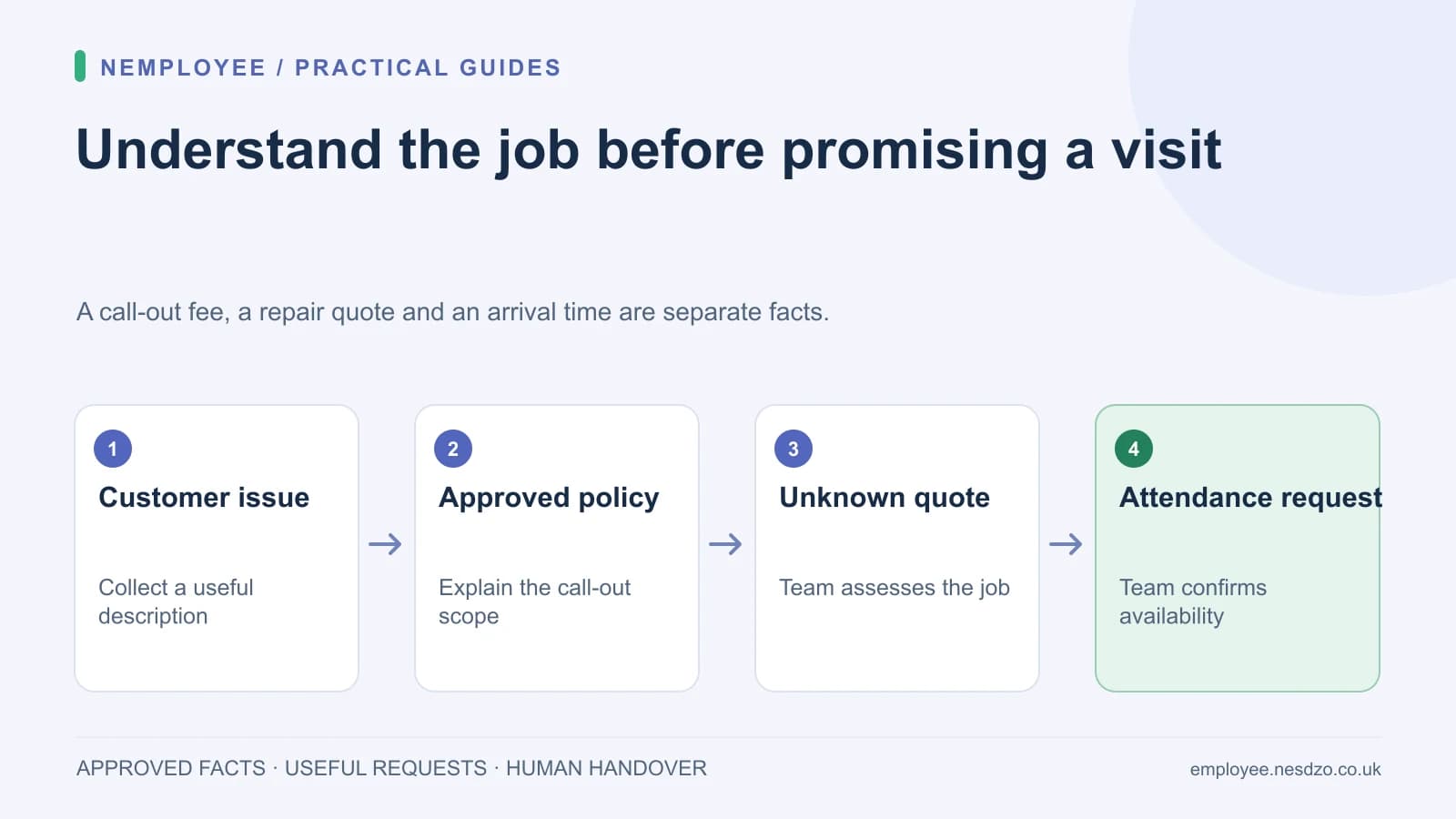
A leaking pipe and a planned boiler service need different next steps. A first response should collect enough detail for a professional to assess the job without pretending to diagnose the fault remotely.
Ask for the essentials
Collect the service address or area, a plain-language description of the issue, when it started and whether the customer can safely share a photo. Ask for the best contact method and when someone can access the property.
Keep questions proportionate. A person dealing with an urgent fault needs a quick route to a human, not a long form.
Separate urgency from diagnosis
The assistant can flag words that suggest an urgent situation and tell the team to respond promptly. It should not declare an electrical or gas system safe or give risky repair instructions. Emergency and safety decisions belong with qualified professionals or the relevant emergency service.
| Question | Useful response |
|---|---|
| What is the call-out fee? | Use the approved fee and explain what it covers. |
| How much will the repair cost? | Keep assessment-dependent quotes with the team. |
| Can you arrive immediately? | Do not invent availability or an arrival time. |
| How do I repair a dangerous fault? | Route safety assessment to appropriate qualified help. |
Prepare a useful handover
A concise lead profile should show the issue, location, urgency, photos if available and the requested visit or quote. The team can then check availability, assess the work and confirm any price.
If the customer contacts you again from a different channel, match their history carefully before exposing previous details.
Collect the facts a professional needs, flag urgency and leave diagnosis, price and visit confirmation to the team.
Try the workflow before adding business details.
Try the free home services businesses chatbot example →
The business is fictional. The public preview does not create real bookings or contact customers.